
Research Peptide Storage & Handling Guide
Cellugenix peptide compounds are shipped as lyophilized (freeze-dried) powder for laboratory research use only. They are not approved for human or animal use, consumption, injection, or any clinical application. This guide covers how to store, inspect, and handle lyophilized samples to maintain their integrity for research purposes.
Why Are Storage Conditions Important?
Peptides are sensitive molecules. Heat, light, and moisture exposure can break down their structure and affect research results. Following a consistent storage protocol from the moment a shipment arrives keeps samples stable and ensures data collected from them stays reliable.
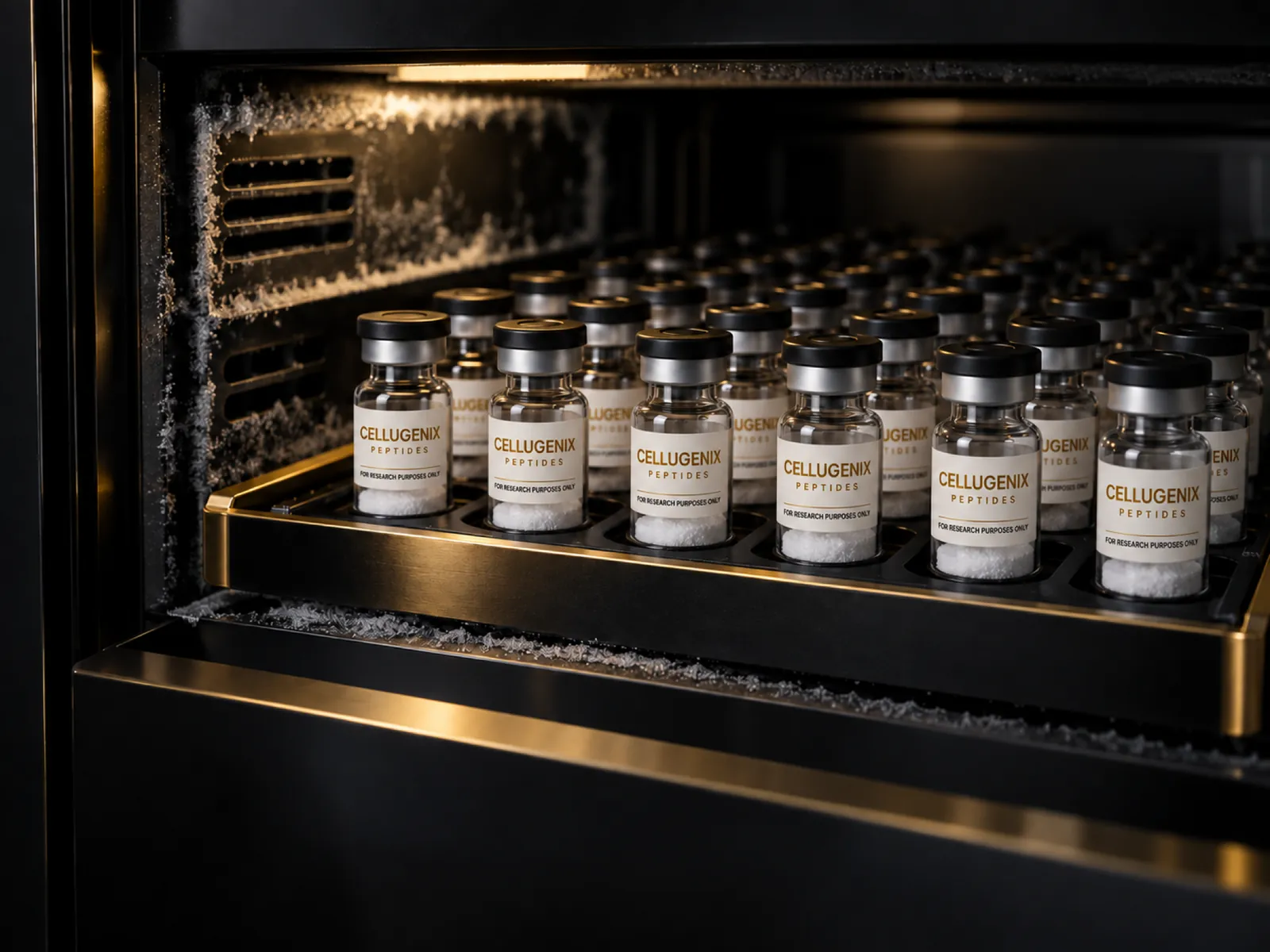
Storage Guidelines for Peptides as Lyophilized Powder
Use the following table to determine appropriate storage temperatures based on your planned research usage timeline.
| Storage Condition | Recommended Temperature | Typical Shelf Life | Notes |
|---|---|---|---|
| Short-to-medium term | 2 to 8°C (refrigerator) | 12 to 18 months | Suitable for regular research use within this window |
| Long-term / archival | -20°C or colder | 24+ months | Best for extended storage or infrequently used stock |
| Unrefrigerated (room temperature) | 15 to 25°C, short duration only | Days; not recommended for extended periods | Acceptable briefly during transit or lab handling only |
Cellugenix supplies and ships every compound as a sealed lyophilized vial. Any handling after the seal is opened follows the purchasing laboratory's own protocols.
Step-by-Step Handling Instructions
Proper technique during receiving, opening, and storage is critical to maintaining peptide stability; follow these procedures to ensure experimental consistency.
Upon Receiving a Shipment
Inspect your delivery immediately upon arrival to confirm product integrity and ensure proper documentation is aligned with the received lot.
- Open the outer packaging promptly and check for any signs of damage or temperature exposure during transit.
- Move vials to appropriate refrigerated or frozen storage as soon as possible after unboxing.
- Compare the compound and strength on the vial label with the matching Certificate of Analysis (COA) in the COA library.
- Inspect the vial visually. Lyophilized powder should appear as a dry cake or fine powder. Any clumping, discoloration, or unexpected moisture may indicate a storage or shipping issue.
Before Opening a Vial
Adhere to the following best practices when preparing to access your sample to minimize the risk of moisture condensation and contamination.
- Let the vial sit at room temperature for a few minutes before opening. This step prevents ambient moisture from condensing inside the vial once the seal is broken.
- Use clean, dry tools when accessing the vial to avoid introducing contaminants.
- Reseal the vial tightly and promptly return it to proper cold storage if the full contents are not used at once.
Ongoing Storage Practices
Implement these sustained laboratory practices to safeguard your samples against environmental factors like light and humidity during long-term storage.
Keep vials away from direct light. Some peptide sequences are sensitive to light exposure and degrade faster when exposed.
Store vials upright in a dedicated refrigerator or freezer shelf, separate from food or other consumable items.
Avoid opening and resealing vials repeatedly, as each exposure to air and ambient humidity can affect the powder over time.
Label every vial clearly with the product name, lot number, and date received.
Keep a simple log of when each vial is opened and how much powder has been used, to track remaining stock and shelf life accurately.

Storage Checklist
Review this quick-reference checklist to confirm that all essential preservation steps have been completed for your inventory.
- Shipment inspected for damage immediately upon arrival
- Vial lot number matched against the COA
- Powder appearance checked (dry cake or fine powder, no clumping or discoloration)
- Vials moved to 2 to 8°C (short term) or -20°C (long term) storage promptly
- Vials protected from direct light
- Vials resealed tightly after each use
- Storage log updated with received date, opened date, and usage
Signs a Sample May Be Compromised
Regularly evaluate the physical state of your peptides. If you observe these indicators of degradation or contamination, discontinue use and document the batch.
| Observation | Possible Cause | Recommended Action |
|---|---|---|
| Discoloration of powder | Degradation from heat, light, or age | Do not use for research; log the batch |
| Clumping or caking of powder | Moisture exposure during storage or handling | Inspect seal integrity; contact support if seal was intact |
| Unexpected liquid inside a sealed vial | Storage or shipping temperature failure | Contact Cellugenix support with the lot number |
| Lot number mismatch with COA | Labeling or fulfillment error | Contact Cellugenix support before use |
Important Reminder
Cellugenix Peptides products are supplied strictly as lyophilized powder for laboratory research and are not intended for human or animal use in any form, including injection, ingestion, topical application, or any other route of administration.
Any reconstitution or further preparation performed by a researcher is done at their own discretion and responsibility, in accordance with their institution's safety protocols and applicable laws.
Read more about handling and storing research compounds in our research guides.