GHK-Cu Copper Peptide: Research Overview and Identifiers
Quick Answer
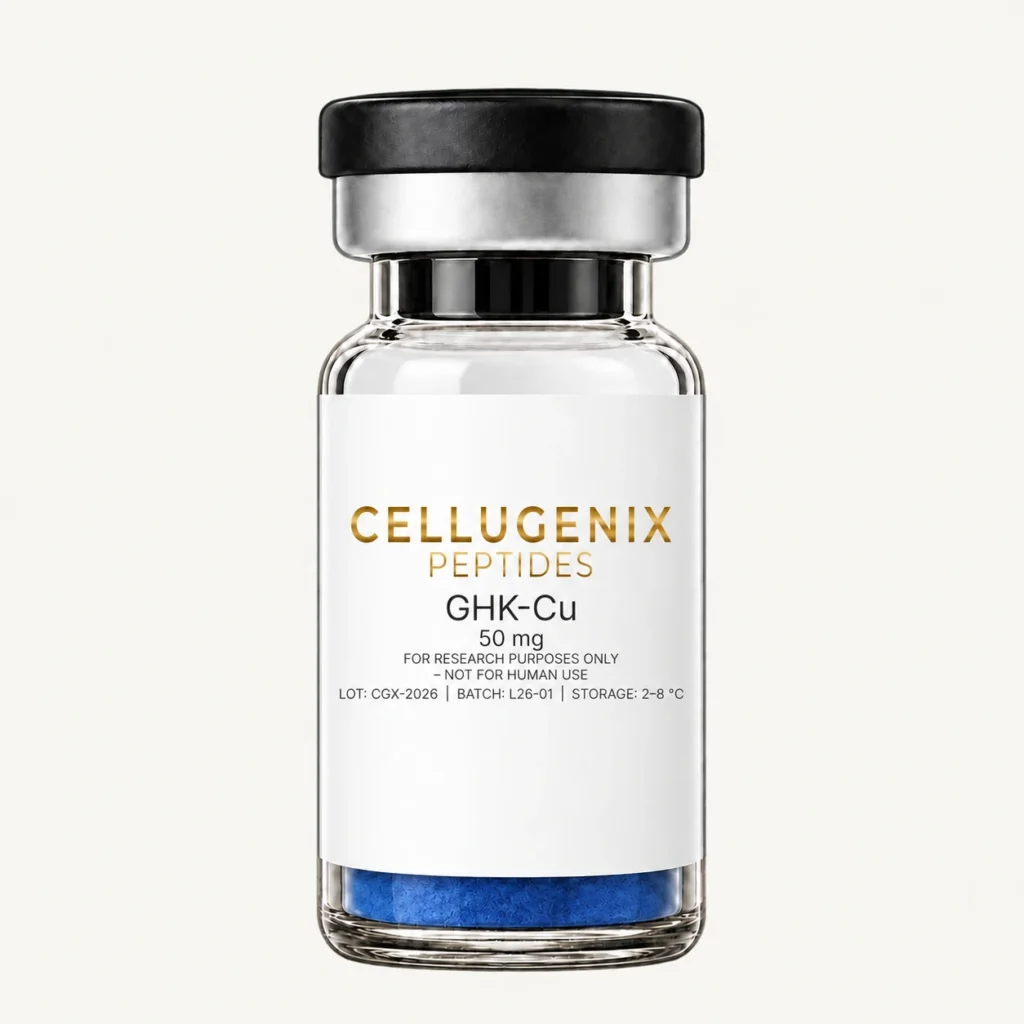
GHK-Cu is the copper(II) complex of glycyl-L-histidyl-L-lysine, a tripeptide first identified in human plasma. Its CAS number is 89030-95-5 and the complex has a molecular weight of about 402.9 g/mol (C14H23CuN6O4+). It is studied in copper binding and transport, in collagen and extracellular-matrix gene expression in fibroblast cultures, and in antioxidant enzyme assays.
Key Takeaways
- Tripeptide Gly-His-Lys bound to one copper(II) ion.
- CAS 89030-95-5, about 402.9 g/mol.
- A small copper-transport molecule, unlike the larger signaling peptides it is often grouped with.
- Appears in tissue and matrix research alongside BPC-157 and TB-500.
Identifiers
| Field | Value |
|---|---|
| Structure | Gly-His-Lys complexed with Cu(II) |
| Other names | Copper tripeptide-1, prezatide copper |
| Molecular formula | C14H23CuN6O4+ |
| Molecular weight | 402.9 g/mol |
| CAS number | 89030-95-5 |
| Form | Lyophilized solid, sealed vial |
How the Copper Is Held
The histidine side chain, the free N-terminal amine of glycine and the peptide backbone together form a tight binding site for a single Cu(II) ion. That is why GHK has a very high affinity for copper and why most research uses the pre-formed copper complex rather than the free peptide.
Research Areas
- Copper binding and transport
- Collagen and extracellular-matrix gene expression in fibroblast cultures
- Antioxidant enzyme assays
GHK-Cu vs BPC-157 vs TB-500
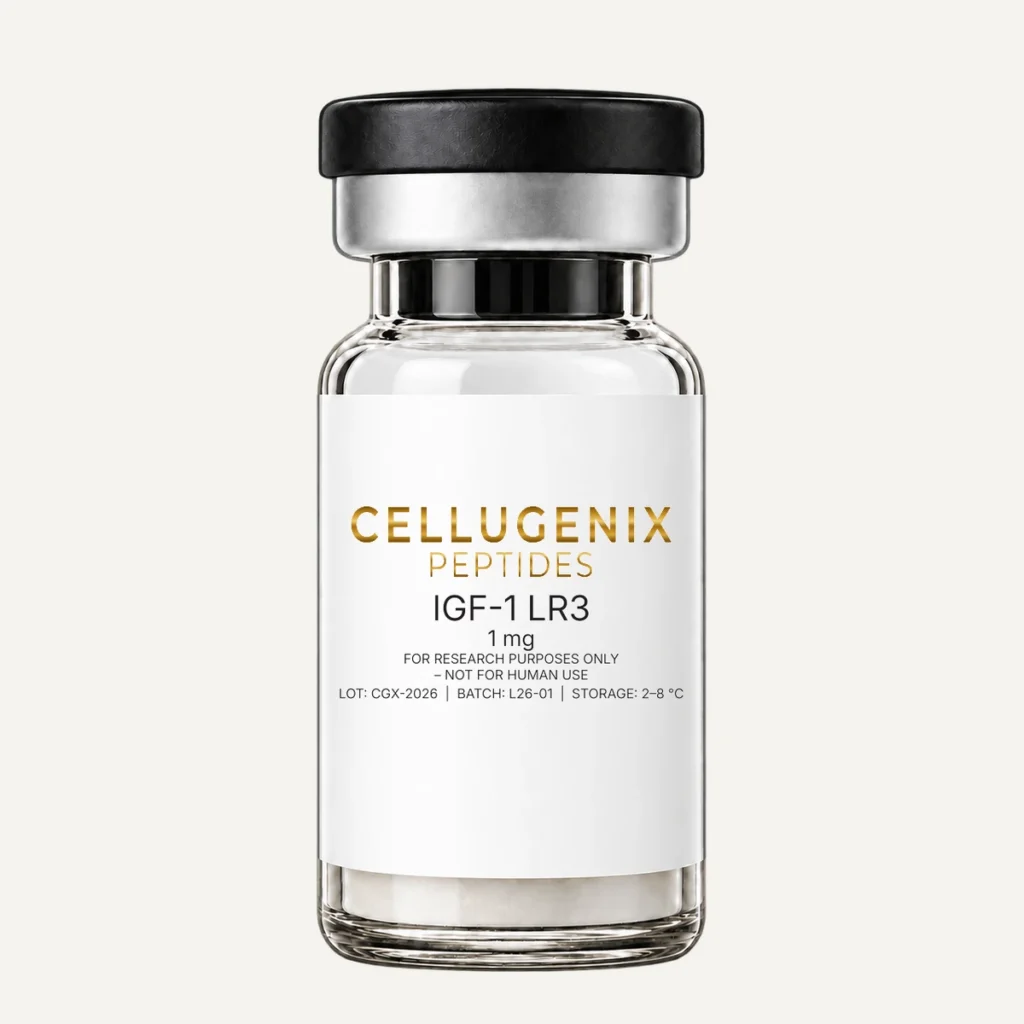
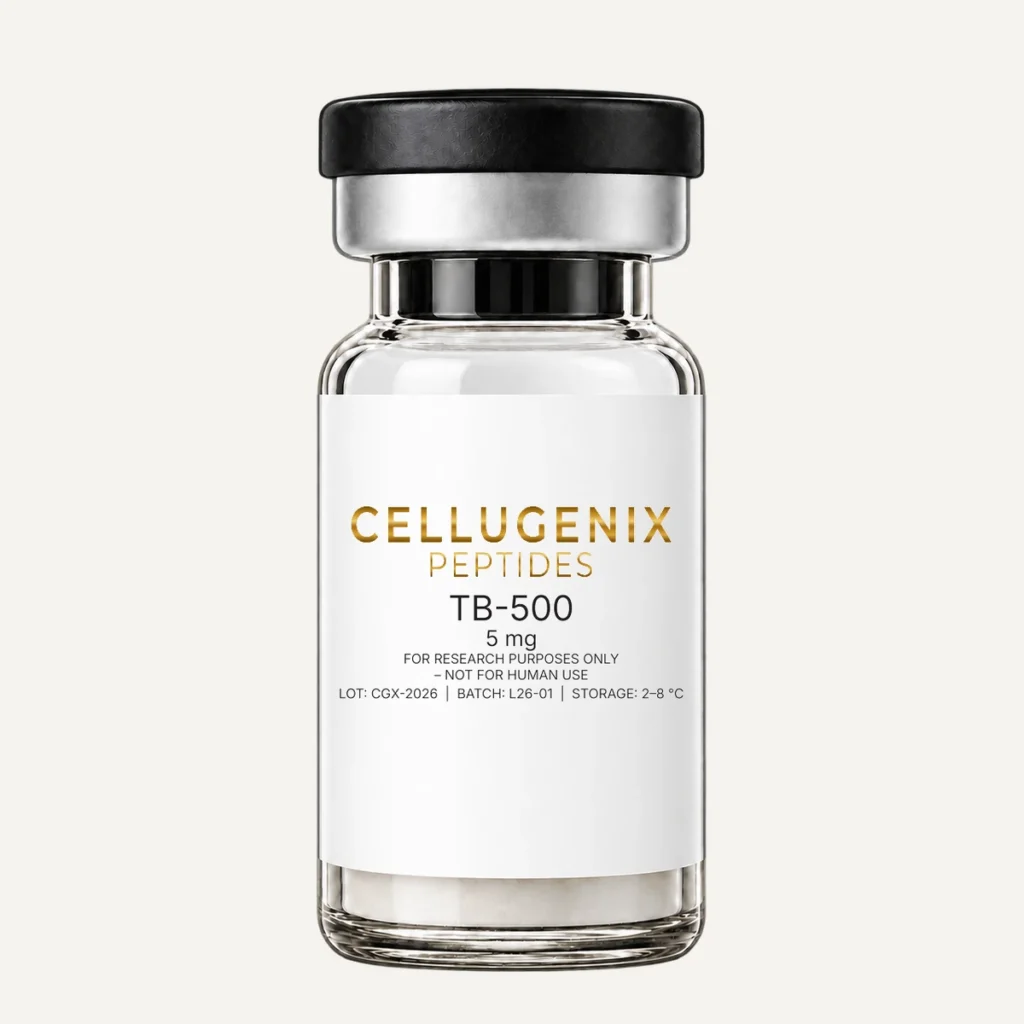
These three are often ordered together for tissue and matrix research, but they are very different molecules: GHK-Cu is a three-residue copper complex, BPC-157 a 15-residue peptide studied in VEGFR2 and nitric-oxide signaling, and TB-500 a thymosin beta-4 fragment studied in actin binding. Our GHK-Cu + BPC-157 + TB-500 research bundle supplies them as separate vials, and the GLOW Blend combines them in one vial with one lot number. For the other two, see BPC-157 vs TB-500.
Storage of the Sealed Vial
All of these compounds ship as lyophilized (freeze-dried) solids in sealed vials. Store sealed vials as stated on the label, protected from light and moisture, and see our storage and handling guide for temperature ranges. Each vial is labelled with its lot number, which ties it to its certificate.
Analytical Verification and Documentation
Each lot is tested by Testides, an independent laboratory, for HPLC purity and content. Certificates are published with their report numbers so they can be checked against the lab’s own record:
New to certificates? Our guide on how to read a COA walks through each field.
Frequently Asked Questions
What is GHK-Cu?
GHK-Cu is the copper(II) complex of the tripeptide glycyl-L-histidyl-L-lysine, studied in copper transport and in extracellular-matrix gene expression in fibroblast cultures.
What is the CAS number of GHK-Cu?
The CAS number of GHK-Cu is 89030-95-5.
What is the molecular weight of GHK-Cu?
The GHK-Cu complex (C14H23CuN6O4+) has a molecular weight of about 402.9 g/mol.
Why is GHK-Cu blue?
The color comes from the bound copper(II) ion, which absorbs light in the red part of the spectrum.
All compounds discussed are sold for in-vitro laboratory research only. They are not for human or animal use and not for diagnostic or therapeutic procedures. Nothing here describes or suggests use in people.
For Research Use Only. Not for use in diagnostic or therapeutic procedures.